 2025-07-11


What After Vibe Coding: Theecode’s Next Evolution
Every company has defining moments that shape its identity. For Theecode, the era of Vibe was one of those moments. It represented the company’s coming‑of‑age: a commitment to delivering cutting‑edge digital experiences with flair, empathy and technical excellence. But brands are not static. They evolve as markets shift, technologies mature and teams grow. In recent years, Theecode has transitioned from Vibe into something deeper—a philosophy that combines human creativity with AI‑powered engineering. This next evolution reflects a more ambitious mission: to build products and platforms that transform industries, not just delight users. This article reflects on why the Vibe era was special, what prompted the evolution, and what the future holds for Theecode and its partners.
The journey after Vibe is not about abandoning what made Theecode unique. It’s about building on that foundation. Understanding this evolution is crucial for clients, collaborators and anyone interested in how creative technology companies reinvent themselves. As we explore the reasons behind the shift, you’ll see that the answer lies in a combination of market forces, technological advancements and introspection about what kind of impact the company wants to make.
Why “Vibe” Was Just the Beginning
When Vibe was launched, it encapsulated Theecode’s obsession with crafting products that felt alive. It was a rallying cry for designers and engineers to push the boundaries of interactivity, aesthetics and performance. Vibe emphasised the intangible qualities that make a product memorable: micro‑animations that guide the eye, copy that feels conversational rather than corporate, and technical choices that prioritise responsiveness and reliability. Under the Vibe banner, Theecode attracted clients who valued elegance and innovation. Projects ranged from fintech apps to e‑commerce platforms to educational tools—all unified by a commitment to human‑centric design.
However, as Theecode matured, its leadership realised that creating an exceptional vibe was only part of the story. While delightful interfaces are important, the underlying systems must support complex business requirements, integrate with diverse ecosystems and scale gracefully. Clients were increasingly asking for end‑to‑end solutions that combined strategy, design, engineering, data science and platform integration. Theecode’s teams found themselves doing more than producing polished front‑ends; they were building payment engines, designing lending workflows and architecting analytics layers. The name “Vibe” didn’t fully convey the breadth of the company’s ambitions or the maturity of its capabilities.
Embracing the Human + AI Delivery Loop
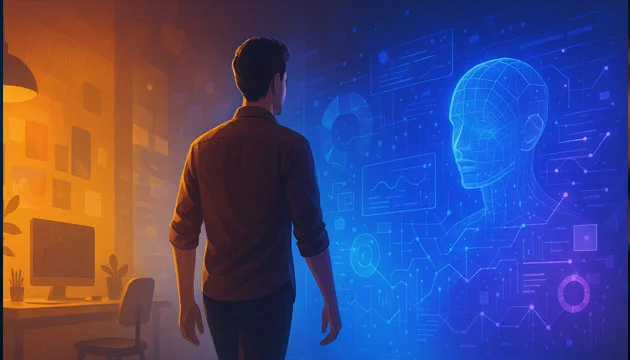
One of the most significant drivers of Theecode’s evolution is the rapid advancement of artificial intelligence and its application in software development. The team recognised early on that AI is not a replacement for human creativity but an amplifier. For mundane and repetitive tasks—like code generation, regression testing or data extraction—AI can dramatically reduce effort and time. This frees up humans to focus on high‑leverage activities such as problem framing, strategic design and ethical considerations. Theecode formalised this insight into what it calls the Human + AI delivery loop. In this loop, AI tools assist with prototyping, documentation, testing and even user research synthesis, while humans set direction, interpret nuance and make judgment calls.
The Human + AI delivery loop also affects organisational structure. Teams are organised into pods that own specific outcomes. Each pod includes designers, engineers, product managers and AI specialists. By working together from the outset, they ensure that AI isn’t bolted on as an afterthought but integrated into the workflow. This methodology enables faster iteration cycles—because AI accelerates tasks like wireframing or test generation—and higher quality outputs, because humans remain accountable for ethics, context and experience. The loop is not linear but cyclical: data from products feeds into AI models, which in turn inform design improvements, which then generate more data.
This approach signals a departure from the Vibe era’s emphasis on purely human‑crafted experiences. It acknowledges that modern software is built collaboratively with algorithms. At the same time, it safeguards the human element that made Theecode’s work stand out. The result is a new delivery model that can scale without losing soul. Projects like AI‑assisted credit scoring tools or dynamic content generation platforms exemplify this synthesis of human and machine.
Building for Impact, Not Just Aesthetics
Another reason for moving beyond Vibe is a shift in the company’s purpose. Theecode wants to solve problems that matter at an industry level. While the early years saw numerous consumer apps and marketing sites, more recent engagements involve critical infrastructure: lending ecosystems, healthcare portals, supply chain platforms and public sector services. These projects demand a deep understanding of regulatory environments, data privacy, scalability and interoperability. They also have profound social consequences: equitable access to finance, healthcare inclusion, climate resilience and educational opportunity.
In this context, good design still matters, but it is measured not just by aesthetic delight but by tangible outcomes. Did the platform reduce time to disbursement? Did it increase access for underbanked communities? Does it surface insights that help policymakers make better decisions? Theecode’s teams ask these questions at the start of each engagement. They align on metrics that go beyond click‑through rates or net promoter scores to include social impact, economic empowerment and sustainability. This expanded definition of success informs everything from user research to technical architecture.
New Business Models and Ecosystems
Theecode’s evolution has also been shaped by changes in how software is delivered and monetised. Subscription models, usage‑based pricing and platform ecosystems are now the norm. Clients are less interested in one‑off projects and more interested in partnerships that allow them to evolve their products over time. Theecode has responded by offering flexible engagement models: dedicated product pods, revenue‑share arrangements and co‑innovation labs. These models align incentives with outcomes, ensuring that both Theecode and its clients are invested in long‑term success rather than short‑term deliverables.
Partnerships with platforms like Glenzy also play a significant role. By collaborating closely with infrastructure providers, Theecode can offer end‑to‑end solutions that include both bespoke user experiences and reliable backend services. This reduces time to market and enables clients to focus on their unique value propositions. It also positions Theecode as an orchestrator of ecosystems rather than a vendor in a supply chain. Whether building a vertical SaaS for agriculture loans or integrating embedded finance into mobility apps, the company now views each project through the lens of ecosystem strategy.
Culture, Team and Continuous Learning
Evolution isn’t just about strategy and process; it’s also about culture. Theecode has cultivated a culture of experimentation, humility and inclusivity. Designers are encouraged to learn Python; engineers attend workshops on ethnographic research; AI specialists participate in ethics discussions. The company invests heavily in continuous learning, offering internal courses on new technologies, industry regulations and soft skills like facilitation and conflict resolution. This interdisciplinary mindset enables teams to communicate across boundaries and come up with holistic solutions.
Remote work has also played a part in shaping the next evolution. Theecode has embraced a distributed model that allows it to recruit talent globally. Time zone diversity encourages asynchronous collaboration and documentation, which pairs well with the Human + AI loop. It also fosters cultural diversity, bringing perspectives from different markets and backgrounds into product decisions. With open communication channels and a transparent leadership style, the company maintains a sense of unity despite geographic dispersion. This inclusive culture is a key differentiator in attracting and retaining top talent in a competitive industry.
Looking Ahead
So what comes after Vibe? Theecode’s next evolution is still unfolding, but a few themes are clear. The company will continue to invest in AI as a force multiplier while prioritising ethics and transparency. It will build products that tackle systemic challenges—financial inclusion, climate adaptation, digital health—and measure success by impact, not just revenue. Partnerships with platforms like Glenzy will deepen, enabling Theecode to offer integrated product and infrastructure stacks that accelerate innovation. And the company’s culture of continuous learning, inclusivity and experimentation will remain the bedrock that supports all these ambitions.
For clients and collaborators, this means that working with Theecode is no longer just about creating a beautiful interface or a slick mobile app. It’s about co‑inventing solutions that have lasting value. It’s about tapping into a delivery model where human creativity is augmented by AI, where design decisions are informed by data and where platform partnerships allow rapid scaling. Whether you’re building a fintech product, a public service platform or a digital marketplace, Theecode’s next evolution offers a blueprint for how to combine ambition with responsibility.
Conclusion
The Vibe era will always be an important chapter in Theecode’s story—it taught the company the power of human‑centred design and the importance of creating experiences that resonate emotionally. But evolution is essential in a field as dynamic as technology. By embracing a Human + AI delivery loop, shifting its focus towards impactful problems, adopting new business models and nurturing a culture of continuous learning, Theecode has embarked on a new journey. What comes after Vibe is an organisation that still cares deeply about craft but is unafraid to tackle systemic challenges. It’s an invitation to partners who share these values to join in building the next generation of products and platforms that not only delight users but make the world a better place.