 2026-01-13


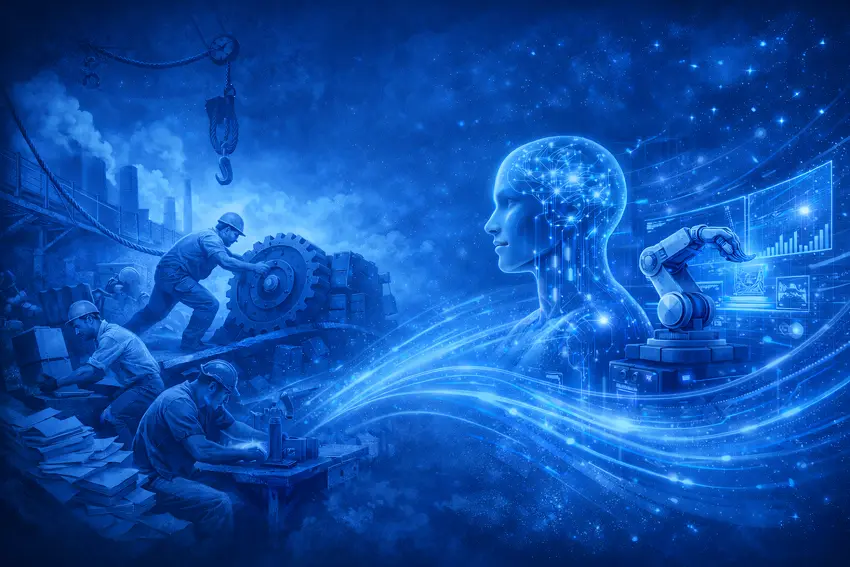
AI-Driven Engineering Workflows: From Manual Processes to Autonomous Teams
The Evolution of Engineering Workflows
Most engineering teams already use AI tools. Copilot writes code. ChatGPT drafts documentation. LLMs review pull requests. But using AI tools isn't the same as having AI-driven workflows.
The difference lies in how deeply intelligence is embedded into your engineering system. Manual workflows rely on human effort at every step: planning, coding, testing, and deployment. Scripted automation removes repetition but still requires constant human intervention to adapt. AI-assisted workflows add intelligence to isolated tasks, like generating test cases or summarising code reviews.
AI-driven workflows go further. They connect these isolated capabilities into a continuous, context-aware system that learns from your team's patterns, anticipates bottlenecks, and adjusts in real time. Semi-autonomous engineering teams operate within this system, where AI handles routine decisions and surfaces the complex ones that need human judgement.
The question isn't whether you're using AI. It's whether your workflows are designed to leverage it systematically or if you're still stitching together point solutions that create more overhead than value.
What "AI-Driven" Really Means in Engineering (Beyond Tools)
AI-driven engineering isn't about replacing developers with models. It's about building workflows that get smarter as your team works.
Data-aware systems track what's happening across your entire engineering lifecycle: commit patterns, review cycles, deployment frequency, and incident timelines. They don't just log events; they understand relationships between them. When a feature consistently causes rollbacks, the system notices. When certain code patterns correlate with production issues, it flags them early.
Context-aware workflows understand where your team is in a sprint, what dependencies exist between services, and which changes carry more risk. A code review tool that knows you're two days from release will surface different insights than one that treats every PR the same way. Context turns generic suggestions into actionable guidance.
Continuously learning systems improve without manual reconfiguration. They adapt to your team's coding standards, testing practices, and release cadence. Over time, they predict sprint capacity more accurately, catch edge cases your team has seen before, and route decisions to the right people faster.
This isn't system-level thinking as a buzzword. It's recognising that isolated AI tools create fragmentation. Real engineering velocity comes from intelligence that spans planning, execution, quality, and deployment, not from bolting another assistant onto your existing chaos.
Step 1: Mapping Manual Bottlenecks Across the Engineering Lifecycle
Planning & Estimation
Requirements arrive incomplete. Stories lack technical context. Estimates vary wildly because no one remembers how long similar work actually took. Teams spend hours in refinement meetings trying to align on scope, only to realise halfway through a sprint that critical dependencies weren't surfaced upfront.
Code Review & QA
Pull requests sit in queues for days. Reviewers context-switch constantly, losing depth in their feedback. Manual testing catches obvious issues but misses edge cases. QA cycles stretch because there's no clear handoff protocol, and defects get discovered late when they're expensive to fix.
Release Coordination
Deployments require manual checklists and cross-team synchronisation. Feature flags need constant monitoring. Rollback decisions happen in Slack threads instead of through clear criteria. Every release feels like a small crisis because no one has full visibility into what's going out or what might break.
Incident Response
Alerts fire, but context is scattered across logs, monitoring tools, and tribal knowledge. Engineers debug the same issues repeatedly because root causes aren't systematically captured. Post-mortems happen, but lessons learnt don't feed back into prevention.
Mapping these bottlenecks isn't about assigning blame. It's about identifying where friction compounds where manual processes create cascading delays that slow your entire engineering system. That's where AI-driven workflows create the most leverage.
Step 2: Introducing AI Assistance into Core Engineering Activities
Code Intelligence & Review Assistance
AI can analyse pull requests for patterns your team has flagged before security vulnerabilities, performance anti-patterns, and inconsistent error handling. It doesn't replace human reviewers; it filters out the noise so they can focus on architectural decisions and business logic. Code intelligence tools surface relevant context from past commits, documentation, and similar implementations across your codebase, reducing the cognitive load of understanding unfamiliar modules.
Test Case Generation & QA Automation
Instead of manually writing test cases for every edge case, AI generates them based on code changes and historical defect patterns. It identifies untested paths, suggests integration tests for new API endpoints, and flags risky areas where coverage is thin. Automated QA doesn't just run tests – it learns which tests matter most for specific changes and prioritises them, cutting feedback loops from hours to minutes.
Predictive Sprint & Release Insights
AI tracks your team's velocity, code complexity, and historical accuracy to surface realistic sprint commitments before you overcommit. It flags dependencies between stories that might cause delays and predicts which features are likely to slip based on current progress. For releases, it assesses risk by analysing what's changed, how well it's tested, and whether similar changes have caused issues before.
The critical design principle here is human-in-the-loop. AI surfaces insights, flags risks, and generates options, but engineers make the final call. This keeps accountability clear and builds trust in the system over time.
Step 3: Building Semi-Autonomous Engineering Pods
Reduced Handoffs
Traditional workflows create bottlenecks at every handoff product from engineering to development to QA and engineering to ops. Pods equipped with AI-driven workflows carry context forward automatically. When a developer completes a feature, the system has already generated test cases, flagged deployment risks, and prepared release documentation. QA doesn't start from zero. Ops knows what's changing and why. The pod moves faster because intelligence flows with the work, not after it.
Faster Decision Cycles
Autonomous pods don't wait for approval on routine decisions. AI provides the data they need to assess trade-offs in real time, whether to refactor now or defer, which technical debt to prioritise, and how to sequence features for minimal risk. Leadership sets the guardrails; the system enforces them. Pods escalate only when decisions fall outside established parameters or when business impact requires executive input.
Embedded Quality & Governance
Quality isn't a separate phase; it's built into the workflow. AI monitors code standards, test coverage, security compliance, and performance benchmarks as the pod works. Governance becomes continuous rather than episodic. Audit trails generate automatically. Risk assessments happen before code ships, not after incidents. Pods maintain velocity without compromising reliability because quality checks are embedded in their daily execution, not bolted on at the end.
This model aligns directly with Human + AI pod structures, where developers work alongside AI copilots that handle repetitive tasks, surface context, and ensure consistency. The result is teams that ship faster, with higher confidence and less management overhead.
Step 4: Governance, Trust, and Control in Autonomous Workflows
Accountability
Autonomy doesn't mean unaccountability. AI-driven workflows create clear audit trails that show who approved what, when decisions were made, and what data informed them. When a pod ships a feature, the system logs which risks were assessed, which checks passed, and which human approvals were required. If something breaks, you trace the decision path, not just the code. Accountability becomes more transparent, not less, because every action is recorded and attributable.
Security & Compliance
AI that generates code or accelerates releases must operate within defined boundaries. Governance frameworks enforce security policies at every stage flagging exposed credentials, blocking non-compliant API calls, and requiring sign-offs for sensitive data access. Compliance checks run continuously, not quarterly. The system prevents violations before they reach production, and when exceptions are needed, they're logged with full justification. Autonomous workflows don't bypass governance; they enforce it more consistently than manual processes ever could.
Bias & Reliability
AI learns from your team's patterns, which means it can perpetuate bad habits if you're not careful. If your historical data shows certain types of features always slip, the system might recommend avoiding them even if the real issue was resourcing, not complexity. Bias mitigation requires regular review of what the system is learning and adjusting its inputs when patterns don't reflect best practices. Reliability comes from designing workflows that degrade gracefully If AI can't assess a decision confidently, it escalates to humans rather than guessing.
Governance isn't a constraint on autonomy. It's the trust framework that makes autonomy viable at scale. Leaders who treat it as a foundation, not an afterthought, build systems their teams can rely on.
Measuring the Impact of AI-Driven Engineering Workflows
- Cycle Time: Time from commit to deployment. AI should reduce this by automating reviews, tests, and risk checks. If it's not dropping, the workflow isn't working.
- Defect Leakage: Number of bugs reaching production. Effective AI should predict risks and generate tests to reduce this. If it stays the same or grows, quality isn't improving.
- Deployment Frequency: How often you deploy. With AI handling checks and risk scoring, teams should deploy more often and with more confidence.
- Team Cognitive Load: Survey your team. AI should reduce context-switching, waiting, and coordination, freeing engineers to focus on solving problems.
Autonomy Is Built, Not Bought
AI-driven engineering workflows aren't a product you implement—they're a capability you develop. Tools provide leverage, but autonomy requires deliberate system design, workflow ownership, and cultural willingness to trust intelligence over instinct.
Organisations that treat this as a technology rollout fail. Those that approach it as a leadership and engineering culture shift create a durable competitive advantage. Your competitors have access to the same AI tools. The difference is how deeply you integrate them into how your teams think, decide, and execute.
Autonomous teams aren't the future. They're the present for companies willing to build them. At Theecode, we've helped fintech and enterprise teams transition from manual processes to semi-autonomous pods that ship faster without compromising governance proving that the right combination of human expertise and AI assistance creates engineering velocity that scales.